
Planning an outdoor lighting system involves more than selecting fixtures—it requires a coordinated approach that balances performance, safety, efficiency, and architectural design. Whether lighting a residential community, multifamily development, campus, or commercial property, a well-designed system ensures consistent illumination while enhancing the overall environment.
This guide outlines the key considerations for designing effective outdoor lighting systems, helping property managers, developers, and project teams make informed decisions.
As part of a broader range of outdoor architectural luminaires, exterior lighting solutions must balance performance, aesthetics, and maintenance efficiency.
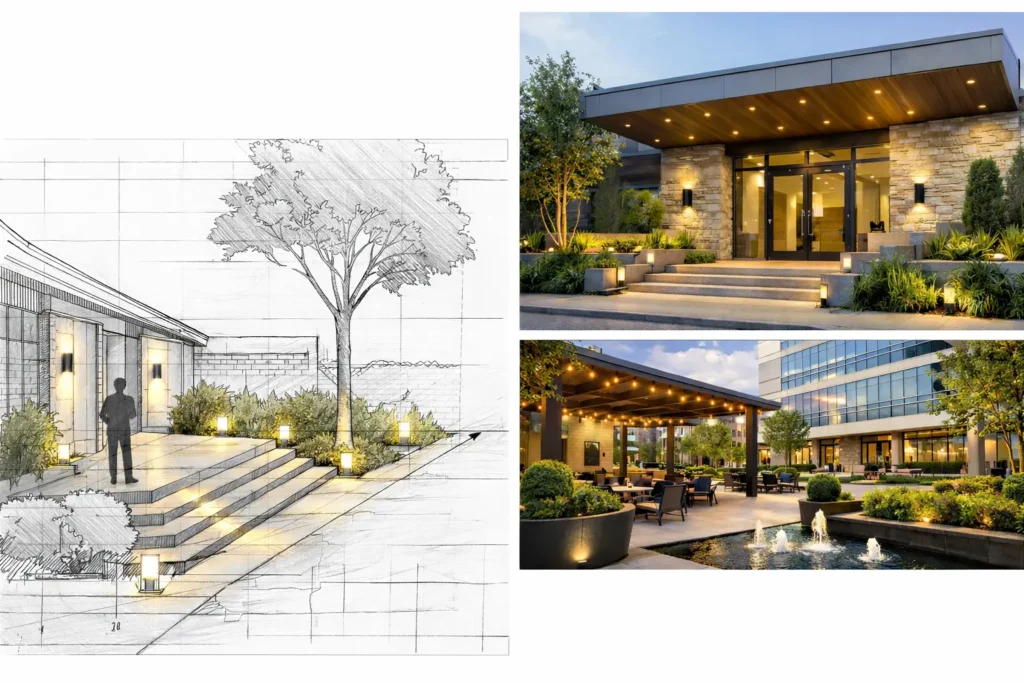
Start with Project Goals & Requirements
Before selecting fixtures, define the primary goals of your lighting system:
- Safety and visibility
- Property aesthetics and curb appeal
- Energy efficiency and operating costs
- Maintenance and long-term performance
- Compliance with local lighting standards
Identify Key Lighting Zones
Most projects include multiple lighting zones, each requiring a different approach:
- Roadways and streets
- Pathways and pedestrian areas
- Parking lots and access areas
- Building entrances and facades
- Open spaces and gathering areas
👉 You can reference:
Choose the Right Lighting Fixtures
Different areas require different fixture types:
Plan for Proper Light Levels & Uniformity
Effective lighting design ensures:
- Consistent illumination across the site
- Minimal dark spots or excessive brightness
- Balanced light distribution for safety and comfort
Select the Right Color Temperature
- 2700K–3000K → warm, residential, upscale environments
- 3500K–4000K → neutral, commercial and mixed-use
- 4000K–5000K → high-visibility, security-focused areas
Minimize Glare & Light Spill
- Use proper optics and shielding
- Avoid excessive brightness
- Control light direction to reduce spill into adjacent areas
Plan for Long-Term Performance
- LED systems reduce energy consumption
- Longer lifespan reduces maintenance costs
- Fewer fixture replacements over time
Incorporate Architectural & Accent Lighting
- Uplighting for facades and landscape features
- RGBW lighting for dynamic effects
- Signage and monument lighting
- Feature lighting for focal points
New Construction vs Retrofit Projects
- New construction → full system design
- Retrofit → replace outdated fixtures with LED
Explore Lighting Solutions by Application
Frequently Asked Questions About Outdoor Lighting Planning
What should be considered when planning outdoor lighting?
Outdoor lighting planning should consider safety, visibility, energy efficiency, fixture placement, and overall design consistency. A well-planned system ensures uniform illumination across key areas such as pathways, roadways, and parking zones.
What types of outdoor lighting fixtures are typically used?
Most projects use a combination of post top lighting, street lighting, pathway lighting, parking lot lighting, and flood lighting to cover different areas of a property.
How do you achieve uniform outdoor lighting?
Uniform lighting is achieved through proper fixture spacing, pole height selection, and consistent light distribution patterns. This helps eliminate dark spots while avoiding excessive brightness.
What is the best color temperature for outdoor lighting?
Most outdoor lighting systems use 3000K to 4000K. Warmer temperatures create a more residential feel, while cooler temperatures provide higher visibility for roadways and security areas.
How can outdoor lighting reduce energy and maintenance costs?
LED lighting significantly reduces energy consumption and requires less maintenance due to longer fixture lifespans. Proper system design also minimizes the number of fixtures needed.
What is the difference between flood lighting and area lighting?
Flood lighting is used for directional illumination of specific areas such as facades or signage, while area lighting provides broader, uniform coverage across large spaces like parking lots and open areas.
How do you minimize glare and light spill in outdoor lighting?
Glare and light spill can be reduced by selecting fixtures with proper optics, shielding, and controlled beam angles, as well as positioning lights carefully within the layout.
Should outdoor lighting be planned differently for different property types?
Yes, lighting design varies depending on the application. For example, HOA communities, multifamily properties, and campus environments each require different lighting strategies based on layout and usage.
Start Planning Your Outdoor Lighting Project
Whether you’re designing a new system or upgrading existing lighting, selecting the right fixtures and layout is critical to long-term performance.
To view available luminaire options and system designs, visit our full range of architectural lighting fixtures or request a quote for your project.